Find an Alert#
Search for alerts in TheHive using different methods depending on your needs—from quick searches to advanced filtering.
If you’re unsure which method to use, refer to the Overview of Search Methods for Alerts topic.
Can't find an alert?
Ensure autorefresh is turned on to automatically display new alerts in lists.
Method 1: Search bar#
Simple searches for one or more alerts without requiring simultaneous actions.
-
In the search bar at the top of the page, enter your search text.

Wildcard character
You can use the wildcard character * to broaden your searches.
The wildcard character acts as a placeholder that matches zero or more characters, helping you find variations of a term or incomplete information.
Examples of use cases:
- Email domains: Entering *@gmail.com returns entities containing the gmail.com domain.
- IP subnets: Entering 192.168.*.* returns entities with IP addresses in the 192.168.x.x subnet.
- URLs: Entering https://malwaredomain.com/* returns entities hosted under the malwaredomain.com directory.
Other advanced search options, such as Boolean and phrase searches, aren't currently supported.
Case sensitivity
Partial-word searches and filters are case sensitive in Elasticsearch, so capitalization matters.
-
Select a result from the list, or choose All results to view the full set of matches.
Refine results
The search bar searches across all element types—cases, alerts, observables, tasks, task logs, jobs, 5.8 comments, and 5.8 pages—but it doesn't support filters.
Use the Global Search feature when you need to refine results more precisely.
Method 2: Similar alerts#
If you want to find one or more alerts similar to a known alert and need to perform actions on them simultaneously.
Filters
Select the filters you want to apply on the Similar cases and Similar alerts tabs to find what you need faster.
-
Open a case, an alert, or a task, and select the Similar alerts tab.

-
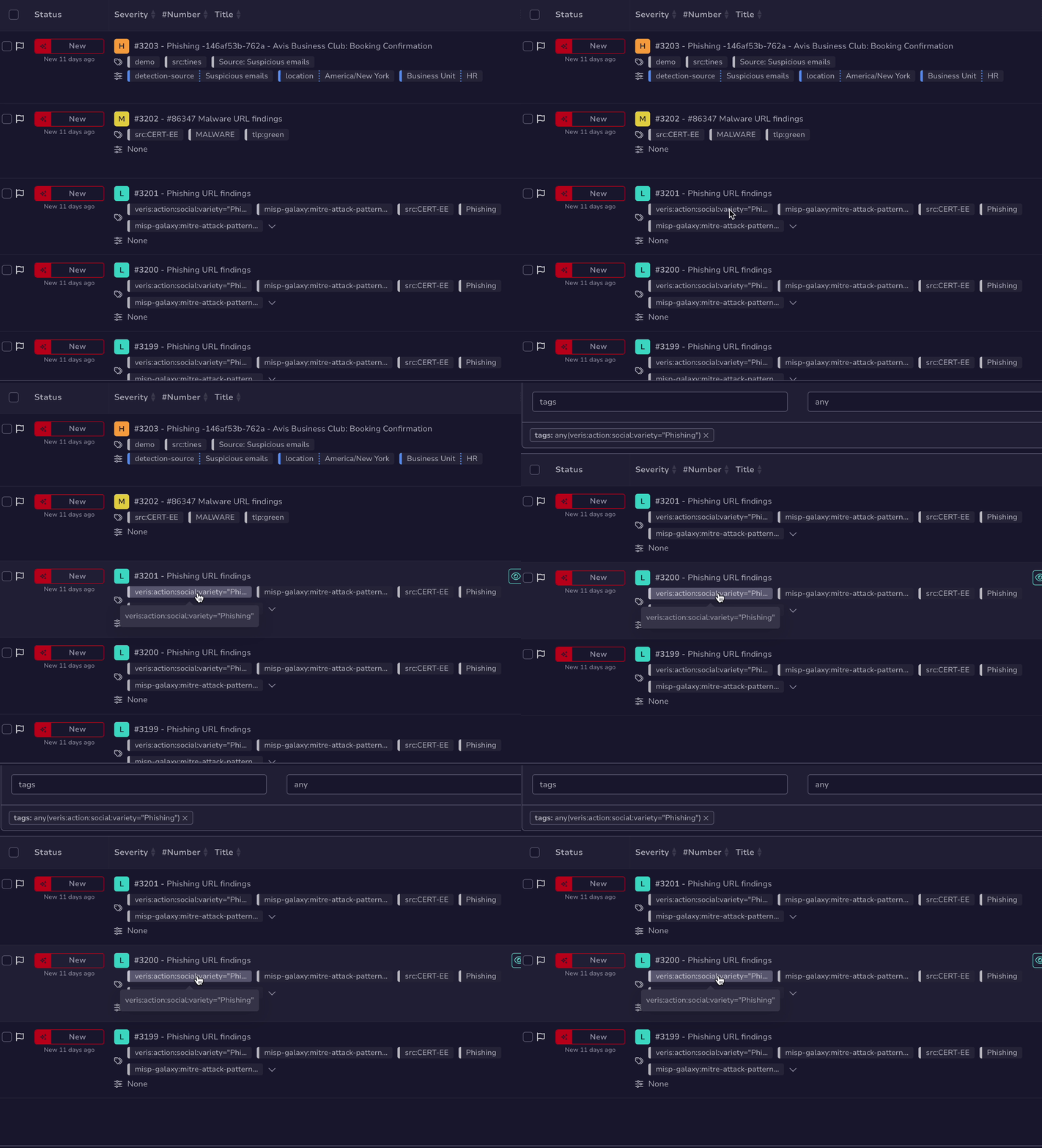
Apply filters using any of these options individually or in combination:
-
Select Quick filters to access predefined filters.

-
Select Add filter and choose one or more filters.

-
Select a value from a field to use it as a filter criterion.
-
-
Based on your inputs, a list of results appears.
You can view up to 300 results per page and navigate through them using Previous and Next.
For more information, see the Find Similar Alerts and Cases topic.
Method 3: Filters in the Alerts view#
If you need to search for one or more alerts to perform actions on them simultaneously.
-
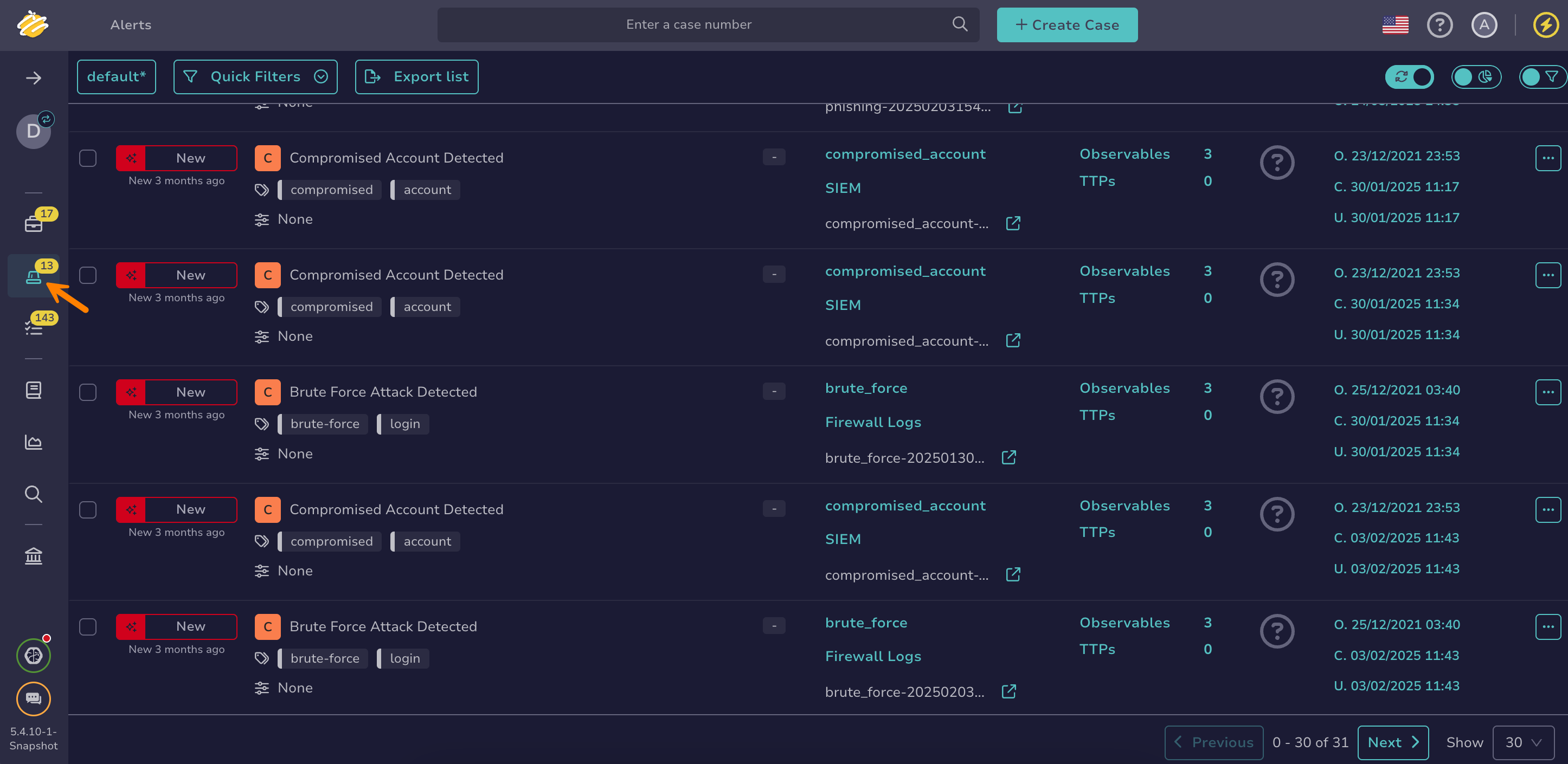
Go to the Alerts view from the sidebar menu.
-
Apply filters using any of these options individually or in combination:
-
Select Quick filters to access predefined filters.
-
Select Add filter and choose one or more filters.
-
Select a value from a field to use it as a filter criterion.
Saving views
If you frequently use filters, consider saving your preferences as views for easy reuse. For more information on filtering and sorting, see About Filtering and Sorting.
-
-
Based on your inputs, a list of results appears.
You can view up to 300 results per page and navigate through them using Previous and Next.
Method 4: Global Search feature#
Advanced searches for one or more alerts without requiring simultaneous actions.
-
Go to the Global Search view from the sidebar menu.

-
Select the Alerts item on the Search scope pane.

-
Enter the keywords you want to search for in the search box displayed by default.
Wildcard character
You can use the wildcard character * to broaden your searches.
The wildcard character acts as a placeholder that matches zero or more characters, helping you find variations of a term or incomplete information.
Examples of use cases:
- Email domains: Entering *@gmail.com returns entities containing the gmail.com domain.
- IP subnets: Entering 192.168.*.* returns entities with IP addresses in the 192.168.x.x subnet.
- URLs: Entering https://malwaredomain.com/* returns entities hosted under the malwaredomain.com directory.
Other advanced search options, such as Boolean and phrase searches, aren't currently supported.
Case sensitivity
Partial-word searches and filters are case sensitive in Elasticsearch, so capitalization matters.
-
To refine results, select Add new filter and choose one or more filters.
Filters narrow your search results and work like the AND operator in a Boolean search.
Required filters
Filters are mandatory for certain fields to ensure the search engine interprets values correctly:
- Fields with specific date formats
- Custom fields
-
Based on your inputs, a list of results appears.
You can view up to 300 results per page and navigate through them using Previous and Next.